
Solar Powered National Transit Service TaaS - Public Transportation
SPNTS is a purpose-built, controlled-access guideway designed specifically for electric autonomous vehicles.
SPNTS is a purpose-built, controlled-access guideway designed specifically for electric autonomous vehicles.

he proposed SPNTS is designed to ultimately provide a nationwide transit service. Robo-taxi fleet providers, including Waymo, Uber, Tesla, and others, could offer vehicles of choice. Vehicles could be selected based on price, comfort level, and purpose.
The current conceptual guideway is approximately 37 feet wide and incorporates three lanes. Two outer lanes provide directional travel. The center lane is reversible and is intended to support maintenance, incident management, emergency access, and operating flexibility. Vehicles operate on continuous concrete tire-support pads rather than a conventional full-width pavement surface. Concrete separation barriers provide lane separation and also house recessed, flush-mounted power, communications, control, and steering rails.

SPNTS stations are more than parking structures. In the current concept, they combine passenger access, vehicle inspection and staging, fleet-service functions, communications, and traffic-management responsibilities. Stations are located off the mainline guideway. Vehicles that are not stopping would continue through the corridor without slowing, while vehicles entering or leaving the station would use dedicated connections.
Each vehicle entering the SPNTS guideway would first enter a station and pass through an automated inspection and authorization area. The system would verify vehicle identity, operating authorization, configuration, weight, and other established vehicle parameters. Because authorized fleet vehicles have known specifications and operating histories, inspection systems can compare each incoming vehicle against its expected baseline to identify abnormal conditions, unauthorized modifications, or other anomalies that require further examination.
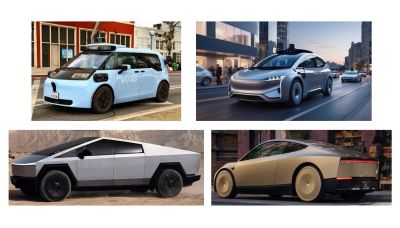
SPNTS Autonomous electric vehicles, modeled after Tesla Model 2-class RoboTaxi or others, seamlessly transition between public street operation and high-speed corridor mode via Smart Access Stations spaced approximately every four miles along a corridor.
Concessionaires provide SPNTS Vehicles and can be from any source, provided they are electric, meet or exceed SPNTS vehicle standards, and have been adapted to pick up power and control signals from the guideway. The base cost for an estimated certified electric vehicle is $35–$45 thousand, with SPNTS modifications estimated at $7,000 to $10,000. The estimated average SPNTS vehicle cost is $42,000.